

Bigger screens mean more impressive, more immersive images, and a 75-inch TV is really big. These days you can buy 85-inch and even larger TVs, but the "bang-for-buck" equation begins to taper off very quickly. I've listed the best 75-inch TVs I've reviewed, along with some 77-inch OLED models, and most include the latest gaming and image quality features, including a 120Hz refresh rate and 4K HDR. If you want to upgrade from a 65-inch-or-smaller TV, then one of these 75-inchers should serve you well.
Our Picks
OLED has had the picture quality high-ground for so long that it was inevitable that one day LCD-based technologies would one day catch up. The TCL QM8K is the closest thing I've seen to an OLED-like picture yet, and that's thanks in part to its "halo control" system. While an OLED like the LG C4 or S95F still has the edge, the QM8K looks fantastic for the money, with excellent black levels, higher brightness, and deeply saturated colors. It's a great TV. As an alternative, the Hisense 75U8QG, is not quite as accomplished as the TCL but worth looking at as it's currently $200 cheaper than the QM8K.
Pros
- Great picture quality
- Very few haloing artifacts
- New Filmmaker mode helps create more accurate pictures
Cons
- Still bright, but dimmer than the TV it replaced
- Worse input lag with games

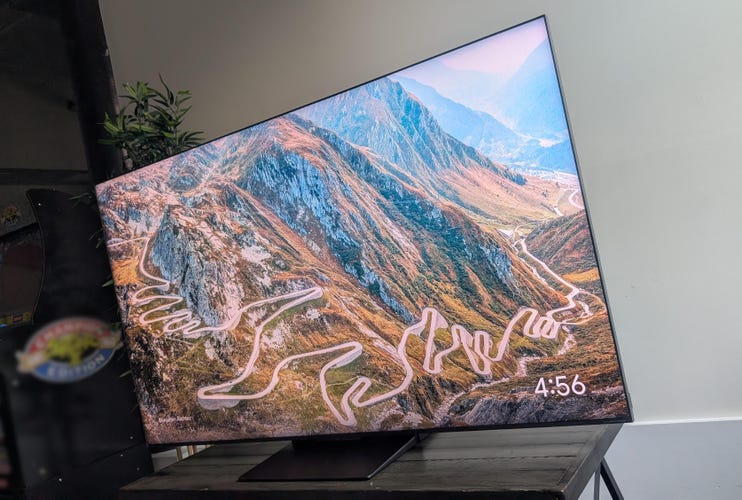
The Samsung S95F is a standout in my list of the best 75-inch TVs, mainly because of its matte finish that nearly eliminates reflections. This is a huge plus for viewing in bright rooms, and it's better at reducing glare than any other OLED TV I've tested, a display technology that has always delivered the best picture available. In terms of image quality, the Samsung S95F beats all its 75-inch competitors, including the LG G5 and last year's G4, with excellent contrast and great color. The S95F also comes with an external box for connections, which means you can keep HDMI cables and the power cord hidden away.
Pros
- Best overall image quality I've tested
- Best-in-class glare reduction in a bright rooms
- Superior contrast and off-angle viewing
- Ultrathin panel with external input box
Cons
- Expensive
- Slightly diminished contrast in bright rooms
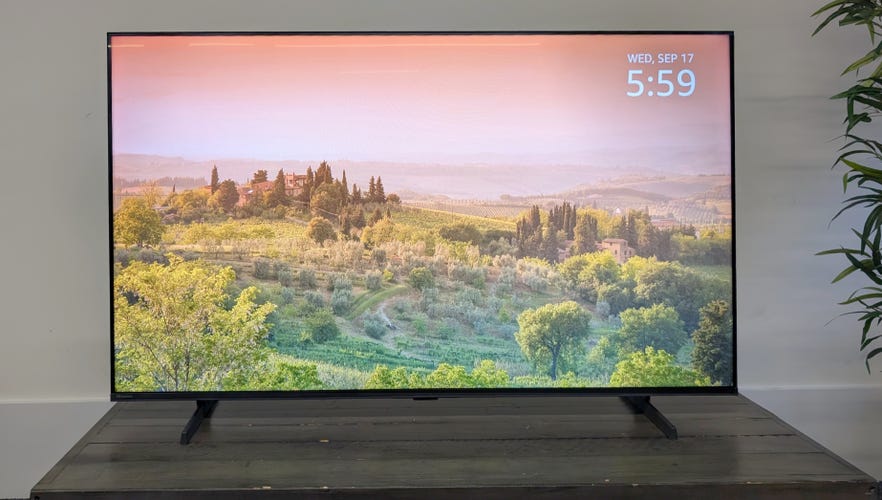
The budget-friendly 75QD7QF offers excellent picture quality thanks to its mini-LED backlights and full-array local dimming. It also incorporates unique gaming features and operates on the user-friendly Google TV system. Plus, the QD7 is significantly cheaper than other 75-inch TVs with comparable quality from more established brands, making it a strong contender for those seeking a great deal on a 75-inch TV.
Pros
- Relatively affordable
- Excellent overall image quality
- Capable Google TV system
- Offers a 55-inch screen size
Cons
- Not quite as bright or dynamic as some competitors
- "Theater" picture modes engage motion smoothing by default
TV DEALS OF THE WEEK
- $178 (save $70)
- $938 (save 1,062)
- $178 (save $70)
- $848 (save $152)
- $428 (save $20)
What is the best 75-inch TV overall?
If you're in the market for a big-screen TV, you may feel some extra pressure to find one that not only meets your size requirements but offers the best features -- all without breaking the bank. The TCL QM8K TV sits near the very top of my list of best TVs: It offers superb picture quality and an affordable price tag. It also includes gaming features like 4K/120Hz input and variable refresh rate that can get the most out of consoles like the PS5 and Xbox Series X. When a friend asks me what 65- to 98-inch TV to buy, and money is still a consideration, I tell them to get the TCL QM8K.
While I have chosen the Samsung S90F as the "best TV" this model doesn't represent the best deal when it comes to the non-65-inch sizes. The LG C4 may be a couple of years old, but it is a fantastic television, and it's not dissimilar from 2025's LG C5 and Samsung S90F. It's cheaper by several hundred dollars and is therefore a better deal.
At CNET, my general advice is that bigger is usually better, and the list below represents the best 75-inch and 77-inch TVs I've reviewed in CNET's test lab, where I've compared them side by side. I've actually reviewed the 65-inch sizes in the series for most of the models listed below, but these larger versions are basically identical as per the manufacturers.
Best 75-inch TVs of 2026

Best 75-inch TV
TCL 75QM8K
Pros
- Great picture quality
- Very few haloing artifacts
- New Filmmaker mode helps create more accurate pictures
Cons
- Still bright, but dimmer than the TV it replaced
- Worse input lag with games
OLED has had the picture quality high-ground for so long that it was inevitable that one day LCD-based technologies would one day catch up. The TCL QM8K is the closest thing I've seen to an OLED-like picture yet, and that's thanks in part to its "halo control" system. While an OLED like the LG C4 or S95F still has the edge, the QM8K looks fantastic for the money, with excellent black levels, higher brightness, and deeply saturated colors. It's a great TV. As an alternative, the Hisense 75U8QG, is not quite as accomplished as the TCL but worth looking at as it's currently $200 cheaper than the QM8K.

Best high-end 77-inch TV
LG OLED77C4
Pros
- Better picture quality than any non-OLED TV we've tested
- Superior contrast and off-angle image
- Best-in-class gaming features
- Sleek styling with ultralight, thin panel
Cons
- Expensive
- Not as bright as higher-end OLED TVs
- No major improvements over previous C models
The LG OLED77C4 stands out among non-OLED TVs in my roundup of the best 75-inch TVs, offering superior picture quality at a reasonable price. It consistently beat out the mini-LED models in our p[previous comparison tests with its perfect black levels, unmatched contrast and great off-angle viewing. While it's not the brightest option, and is beaten out by many 2025 TVs, it still performs incredibly well in all kinds of room lighting. The C4 is also one of the lightest TVs I've ever reviewed, thanks to its carbon-fiber construction.

Pros
- Best overall image quality I've tested
- Best-in-class glare reduction in a bright rooms
- Superior contrast and off-angle viewing
- Ultrathin panel with external input box
Cons
- Expensive
- Slightly diminished contrast in bright rooms
The Samsung S95F is a standout in my list of the best 75-inch TVs, mainly because of its matte finish that nearly eliminates reflections. This is a huge plus for viewing in bright rooms, and it's better at reducing glare than any other OLED TV I've tested, a display technology that has always delivered the best picture available. In terms of image quality, the Samsung S95F beats all its 75-inch competitors, including the LG G5 and last year's G4, with excellent contrast and great color. The S95F also comes with an external box for connections, which means you can keep HDMI cables and the power cord hidden away.
Yet, the main downside is that the Samsung is over twice as much as every other TV here, and while it's an ideal choice for those with brighter rooms, many people will be perfectly happy with a less expensive TV.

Best 75-inch on a budget
Hisense 75QD7QF
Pros
- Relatively affordable
- Excellent overall image quality
- Capable Google TV system
- Offers a 55-inch screen size
Cons
- Not quite as bright or dynamic as some competitors
- "Theater" picture modes engage motion smoothing by default
The budget-friendly 75QD7QF offers excellent picture quality thanks to its mini-LED backlights and full-array local dimming. It also incorporates unique gaming features and operates on the user-friendly Google TV system. Plus, the QD7 is significantly cheaper than other 75-inch TVs with comparable quality from more established brands, making it a strong contender for those seeking a great deal on a 75-inch TV.

Pros
- Easy to use
- Solid contrast
- One of the best streaming suites available
Cons
- Pricier than rivals
- HDR colors are inaccurate
Roku has had its name on TVs for many years, but the 2025 Roku Pro is the best of these I've seen so far. Firstly, it's a Roku TV, so you can expect it to have the best possible user experience, and it includes plenty of thoughtful touches. Secondly, it's got a really good picture, with excellent contrast, and its super-fast response times make it as good for sports as it is for gaming. It's not a flashy TV compared with most of the others here, but it's easy to use, and it's a great value.
Factors to Consider When Choosing a 75-inch TV
With all the TVs available today, and all the technical terms and jargon associated with television technology, it can be tough to figure out what's important. Here's a quick guide to help cut through the confusion.
Price: TVs range in price from $100 to more than $2,000. Smaller screens are cheaper, well-known brands are more expensive, and spending more money can also get you better image quality. Most entry-level TVs have a good enough picture for most people, but TVs last a long time, so it might be worth spending more to get a better picture. It's also best to shop for a TV in the fall, when prices are lower.
Screen size: Bigger is better in our book. We recommend a size of at least 43 inches for a bedroom TV and at least 55 inches for a living room or main TV -- and 65 inches or larger is best. More than any other "feature," stepping up in TV screen size is the best use of your money. One of the most common post-TV-purchase complaints we've heard is from people who didn't go big enough. And we almost never hear people complain that their TV is too large.
Capability: When it comes to entry-level TVs, the most important feature is what kind of smart TV system the TV uses. Among midrange models, look for a feature including full-array local dimming, mini-LED and 120Hz refresh rate, which (unlike some other extras) do help improve the picture, in our experience. And among high-end TVs, OLED technology is your best bet.
For more TV buying advice, check out How to Buy a TV.
How CNET tests TVs
Our TV reviews follow a rigorous, unbiased evaluation process honed over nearly two decades of television reviews. Our primary TV test lab has specialized equipment for measuring light and color, including a Konica Minolta CS-2000 spectroradiometer, a Murideo Sig-G 4K HDR signal generator and an AVPro Connect 8x8 4K HDR distribution matrix. We use Portrait Displays CalMan Ultimate software to evaluate every television we review. In every CNET TV review, three or more similar TVs are compared side by side in various lighting conditions, playing different media, including movies, TV shows and games, and across a variety of test categories, from color to video processing to gaming to HDR. Our reviews also account for design, features, smart TV performance, HDMI input and gaming compatibility, and other factors.
One important aspect of image quality we test is overall brightness. Here's how it compares in nits across select TVs we've tested.
Check out How We Test TVs for more details.
